SESVA_Logo_CircleSESVA_Logo_Stacked Circle_RGB

SES Volunteers Association of Western Australia Incorporated

“Together we can; Together we will”

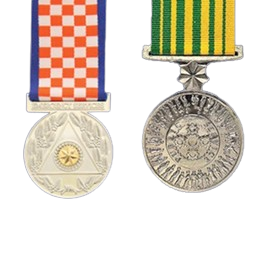
13/10/2026 – Do You Qualify for the National Emergency Medal?

The National Emergency Medal (NEM) recognises Australians who have provided significant or sustained service in response to a declared nationally significant emergency. Eligibility is determined separately for each declared event, with specific criteria relating to dates, locations, duration of service and the nature of the role
performed.

For many emergency service volunteers, including SES members, the first step is to consider whether they were involved in one of the declared emergencies and whether their service occurred during the official response phase.  Service does not need to have been performed on the frontline. Operational support, communications, intelligence, logistics, evacuation centre operations and other roles that directly facilitated the emergency response may also be eligible.

There are two pathways to recognition:

Sustained Service

Awarded to those who served for a minimum period during a declared emergency. The required duration varies for each event and must fall within the specified dates of the declaration.

Significant Service

Awarded for extraordinary service that goes above and beyond normal expectations. Nominees under this category do not need to meet the minimum service duration requirements and are assessed individually by the National Emergency Medal Committee.

The nationally significant emergencies declared to date include:
• Victorian Bushfires 2009
• Queensland Floods 2010-11 and Cyclone Yasi
• Tropical Cyclone Debbie 2017
• North Queensland Floods 2019
• Bushfires 2019-20
• Floods February 2022
• Floods November 2022

Check Your Eligibility

Ask yourself:


• Did I serve during one of the declared emergencies?
• Was my service performed during the response phase?
• Did I meet the minimum duration requirements for that event?
• Did my role directly support or facilitate the emergency response?
• Have my deployment or service records been captured by my organisation?

If you answered yes to these questions, you may be eligible for the National Emergency Medal.

For SES volunteers, this is an excellent opportunity to review your service history and ensure your organisation has accurate records of your deployments and support activities.

Recognition through the National Emergency Medal acknowledges the commitment, sacrifice and professionalism demonstrated during Australia’s most
significant emergencies.


For more information, visit the Governor-General’s National Emergency Medal pages and review the criteria for the specific emergency in which you served. https://www.gg.gov.au/australian-honours-and-awards/national-emergency-medal
11/10/2026 – Albany SES Volunteers Represent WA at National Disaster Rescue Challenge

Flying the Flag for Western Australia 

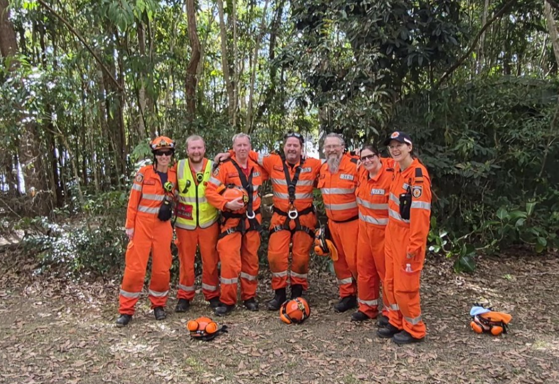
Western Australia was proudly represented at the 2026 National Disaster Rescue Challenge (NDRC) by volunteers from Albany SES. 

Hosted by the Queensland State Emergency Service on the picturesque Atherton Tablelands in Far North Queensland, the challenge brought together more than 300 SES volunteers and staff from across Australia to test their skills, share knowledge and build connections across jurisdictions. 

Joining the WA contingent as observers were SESVA President Greg Cook ESM and DFES Assistant Commissioner Paul Carr ESM, providing an opportunity to witness first-hand the outstanding capability and professionalism of SES volunteers from around the nation. 

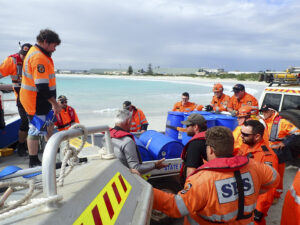
Albany SES team members at the NDRC. From L to R: Kate Pritchett, Ben Whittle, Nigel De Snoo, Gavin Murdock, Paul Bloffwitch, Kathy Way and Jessica Rouse. Photo by Kevin Madden

Realistic Rescue Scenarios, Real-World Skills 

The challenge featured eight demanding scenarios designed to replicate the types of emergencies SES volunteers face in their communities every day. Teams tackled a diverse range of incidents including: 

  • Mass casualty and USAR operations involving a hot air balloon emergency. 
  • Boat rescue scenarios with multiple casualties. 
  • Navigation and search tasks. 
  • High ropes rescues. 
  • Storm damage incidents involving leaking fertiliser tanks. 
  • Casualty rescues from mountain bike accidents and other complex environments. 
  • A non-scoring entrapment and test-release rescue exercise focused on learning and skill development. 

Every scenario tested leadership, communication, technical rescue skills and teamwork under pressure, providing valuable learning opportunities for all participants. 

More Than a Competition 

While the rescue scenarios were a highlight, the NDRC offered much more than practical skills training. Learning stands at Lake Tinaroo Hall showcased Indigenous culture, traditional dance and cultural burning practices, giving participants a deeper appreciation of Australia’s rich heritage and the role of traditional land management in disaster resilience. 

Many volunteers described the cultural experiences as a true “wow factor” that added another dimension to the event. 

Celebrating Excellence 

Congratulations to Gold Coast City SES Unit for taking out the overall championship. New South Wales finished second, with Victoria claiming third place. 

Special recognition also goes to Tasmania, which was awarded the prestigious Hori Howard Spirit of the Challenge Award, celebrating teamwork, camaraderie and commitment to the values of the National Disaster Rescue Challenge. 

Flying the Flag for WA 

For the Albany SES volunteers who attended, the NDRC was a unique opportunity to test their skills alongside some of the best SES operators in Australia, share knowledge with fellow volunteers, and bring home new ideas and techniques that can benefit communities across Western Australia. 

The experience reinforced what many already know: the strength of the SES lies in its volunteers and their willingness to continually learn, adapt and support one another. 

Looking Ahead 

If this year’s challenge is anything to go by, the 2028 National Disaster Rescue Challenge in South Australia will be an event not to miss. 

To the Albany SES volunteers and all WA participants, thank you for proudly representing Western Australia and demonstrating the professionalism, dedication and community spirit that make the SES such a respected organisation nationwide. Well done! 

Comment from Greg Cook ESM

President, SES Volunteers Association of Western Australia Incorpoarated (SESVA)

I would like to congratulate all the teams who competed in the National Disaster Rescue Challenge and acknowledge the outstanding skills, professionalism and dedication demonstrated by SES volunteers from across Australia.

Congratulations to the Gold Coast City SES Unit on winning the overall championship, with New South Wales finishing second and Victoria third. Special congratulations also go to Tasmania for receiving the prestigious Hori Howard Spirit of the Challenge Award, recognising the teamwork, camaraderie and commitment that make this event so special.

I would also like to commend the Albany SES volunteers and all Western Australian participants for proudly representing WA. Their participation provided a valuable opportunity to test their skills, share knowledge with fellow volunteers and bring home new ideas and techniques that will benefit SES Units and the communities they serve.

Events such as the National Disaster Rescue Challenge demonstrate that the strength of the SES lies in its volunteers, their willingness to continually learn and improve, and their commitment to supporting one another.

On behalf of SESVA, thank you to everyone who represented Western Australia with such pride and professionalism. You are excellent ambassadors for our State and for the SES.

I look forward to seeing our WA volunteers continue to build on this experience as we look towards the 2028 National Disaster Rescue Challenge in South Australia.

Well done to everyone involved!

Greg Cook ESM
President
SES Volunteers Association of Western Australia Incorporated (SESVA)

12/10/2026 – Recognition of Tropical Cyclone Seroja Responders

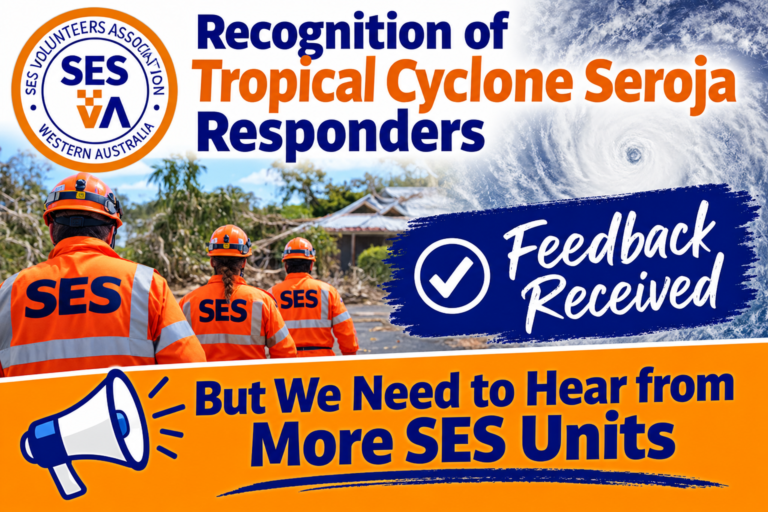
Some Units have provided feedback, But we need to hear from more SES Units

Thank you to the SES Units and members who have already responded to the Association’s request for feedback on recognition for those involved in the Tropical Cyclone Seroja response. We have received a number of thoughtful and constructive suggestions, demonstrating the strong commitment across the SES to ensuring the contribution of
volunteers is appropriately acknowledged.

The feedback received so far has been valuable and has identified several possible avenues that could be explored. However, SESVA does not want to proceed based on the views of only a small number of members or Units.

If your Unit has not yet responded, now is the time to have your say.

The response to Tropical Cyclone Seroja involved thousands of hours of service by volunteers, emergency services personnel and support agencies under exceptionally challenging circumstances.

SESVA acknowledges and thanks DFES for its support in pursuing National Emergency Medal recognition. In particular, DFES prepared and submitted a comprehensive application to the Commonwealth Government seeking recognition of TC Seroja as a nationally significant emergency event.

Unfortunately, the National Committee did not approve the declaration, meaning the National Emergency Medal cannot be awarded for this event.
SESVA also submitted a proposal seeking a WA Premier’s Citation; however, this was not supported by either DFES or the Western Australian Government.

While previous efforts to secure recognition through a National Emergency Medal and a WA Premier’s Citation were unsuccessful, SESVA remains willing to advocate on behalf of members if there is broad support to do so.

Whether you believe further action should be pursued, or whether you consider the matter closed, SESVA wants to hear from you.

The Association’s next steps will be guided by the level of interest and support received from WA SES Units. If only limited feedback is received, SESVA may conclude that there is insufficient support to pursue the matter further. Conversely, strong feedback and clear direction from Units will help shape any future advocacy efforts.

Those who have already responded are thanked for their input. For everyone else, please take a few minutes to tell us what you think. If recognition for Seroja volunteers remains important to your Unit, we need to hear from you.

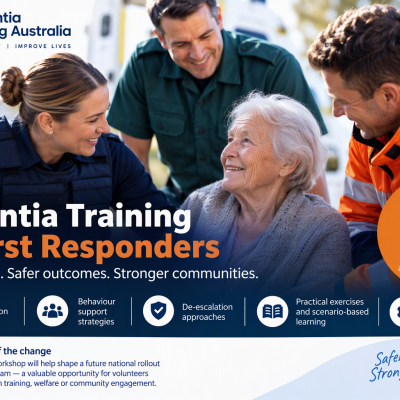
11/10/2026 – Invitation: Dementia Training for First Responders

Free Masterclass , Tuesday 24 November 2026

Each year, police, paramedics, emergency staff and volunteers are called on to support people living with dementia at some of their most distressing moments – a wandering incident, a critical behavioural escalation, or a transfer of care. The right approach in the first few minutes can make all the difference to the person’s safety and dignity, and to yours.  

Dementia Training Australia (DTA) is inviting you to attend a pilot of our new face-to-face masterclass for first responders – a practical, train-the-trainer session for anyone with an interest in building dementia capability within their organisation, whether that’s part of your formal role or something you’ve taken on informally as a workplace champion. 

Feedback from our 2025 national consultation was clear, people in first responder roles need practical strategies they can put into action. This masterclass was built in direct response to that gap. Your participation in this pilot masterclass will directly shape refinements before its national rollout.

During the masterclass you’ll work through: 


  • The MESSAGE communication framework and the ABCDE approach to behaviour support 
  • Recognising the arousal/escalation cycle and responding safely to a critical incident 
  • A practical, scenario-based case study to apply what you’ve learned; and 
  • How to use DTA supporting resources to confidently deliver this content within your own organisation.   

At the end of the session, you’ll take home a bundle of useful resources, including a printed facilitator guide, workbooks, fact sheets, posters, and communication tips lanyard cards. 

Event details 

  • Cost: Free 
  • Date: Tuesday 24 November 2026 
  • Time: 9:00am – 12:00pm (morning tea included) 
  • Location: Seminar Room 2, Bentley Technology Park 
  • Venue: Bentley Technology Park. 

Reserve your place 

Places are limited — please RSVP by Tuesday 3 November to Rachael.morcombe@uwa.edu.au, noting any dietary or accessibility requirements. 

We’d be delighted to have you there.  Please share with your respective colleagues and networks as you feel appropriate.  


Demential training pic


Before you attend 

Please complete DTA’s free online course, Dementia Training for First Responders, prior to the session. It takes around 1 hour, is self-paced, and provides CPD points plus a certificate of completion: https://dta.com.au/courses/dementia-training-for-first-responders 

This gives everyone a shared foundation, so we can use our time together to focus on applying the concepts.

11/10/2026 – Flood boat training update September 2026

SES Volunteers Association (SESVA) President Greg Cook ESM and Vice President Alan Hawke met with the DFES Assistant Director, Marine Services, Mark Eatts, for an update on the implementation of proposed new training requirements for SES flood rescue boat operators and crew.

Background

SESVA recently circulated a Position Paper to affected SES units summarising SES unit feedback on proposed changes to flood rescue boat (FRB) operator training and certification requirements arising from Australian Maritime Safety Authority (AMSA) regulatory changes.

Flood boat rescue is a specialist capability conducted by 16 of WA’s 64 SES units and relies heavily on skilled volunteers. While SES flood boat operators currently undertake extensive training, competency maintenance, and operational currency requirements through DFES, recent changes to the National Law governing domestic commercial vessels have introduced additional qualification and compliance obligations.

The Position Paper includes 26 concerns that affected SES units had about the national standards and how DFES might implement any changes affecting SES volunteers.
If you want to read the Position Paper, It’s available on the SESVA website.

Scope

The scope of the consultations is limited to SES FRB operations. It does not include swift water rescue operations.

Why is Marine Rescue Service involved?

When DFES became aware of the changes to national standards, the Manager Marine Services was approached for guidance.

SESVA has been assured that changes to SES FRB training competencies is not about a take-over of SES FRB operations by Marine Rescue Service. There are however
some overlap of Marine Rescue and SES training packages. Competency requirements and synergies with training expertise and skills make for Marine Rescue Service to facilitate consultations.

What has changed
New Safety Management System
The changes to national standards allow scope for exemptions that relieve much of the onerous national requirements until 2030. In the meantime, SES FRB must
additionally implement a Safety Management System for FRB operations.

To assist affected SES units, DFES has prepared a draft template Safety Management System for affected SES units. The template is the basis for SES units to build their
own Safety Management System. The template is not a directive. SES units need to tailor the template to meet local operational circumstances.

If there are any affected SES units that have not yet implemented a Safety Management Plan, SESVA recommends you contact their regional natural hazards district officer.

National Training Standards for Trainer Assessors

The sting in the tail on current training exemption requirements affecting SES FRB training is that Trainer Assessors (TAs) are now required to have a Certificate IV in
Training and Assessment (TAE40110/116/122). DFES TAs  are not certified in that national qualification.

SESVA is advised that Certificate IV in Training and Assessment is open to volunteer trainers. However, there are significant financial and time difficulties for volunteers to
be accredited. DFES is not accredited to deliver that training, so it will have to be obtained from an outside training provider. One idea being floated is that District
Officers be accredited and supervise and or assess training delivered by DFES endorsed FRB volunteer trainers. Also, there are existing volunteers with Cert IV accreditation.

Conclusion

For the time being, SESVA is monitoring the situation and open to facilitating communications with affected SES units wherever possible.

SESVA has asked for a written response to all concerns raised by affected SES units.

SESVA welcomes DFES providing a management plan on the implementation of national standards for SES FRB operations that covers all DFES commands, including an
appropriate single senior coordinating officer.

Alan Hawke

Vice President, SES Volunteers Association of Western Australia Incorporated

10/10/2026 – More Training Matters

Major Training Projects Underway for SES Volunteers

Update provided by David MacLean, District Officer TDSC SES and Marine Rescue.

Significant work is underway to modernise and strengthen several key SES training programs, with three major training projects currently being developed by dedicated Project Advisory Teams (PATs).

Communications Training Review

A comprehensive review of SES communications training is now underway. The project will examine everything from Basic WAERN through to Net Control Station qualifications, with a focus on ensuring communications practices remain safe, effective and fit for purpose during operational responses.

Land Search Team Member Course Refresh

Work is also progressing on a redesigned Land Search Team Member course. The aim is to create a flexible training product that supports both trainer-led delivery and self-paced learning. While no new content is being added, the revised format will make training more accessible and easier to deliver across the State. Once a draft product is available, volunteers and trainers will be invited to assist with testing and refinement.

Flood Boat Operator Course Changes

The Flood Boat Operator course is also undergoing substantial redevelopment to align with Exemption 24 requirements.  PAT members are currently reviewing national standards to ensure the updated course meets contemporary operational
and compliance expectations.

Looking Ahead

All three projects represent significant pieces of work and demonstrate the ongoing commitment to providing volunteers with modern, practical and effective training that supports safe and efficient operations.


General Rescue Training Gets a Refresh

A number of updates have been made to the General Rescue Training Package, helping ensure our training remains aligned with current operational practices, recent Incident Investigation Reports (IIRs), and updated nail gun safety requirements.

What’s New?
• Updated guidance on the approved Makita Battery Operated Nail Gun, including strengthened safety requirements.
• Removal of the Paslode nail gun from training materials following the transition to Makita battery-operated units.
• Improved rescue training content, including updates to stretcher loading procedures and rescue terminology.
• Additional safety messaging covering nail gun use and correct reeving of the D4 descender.
• Refined assessment resources with clearer instructions and improved practical assessment guidance.
• New theory content covering mass calculations and the relationship between BGR, GR and USAR capabilities.

Available Now

The updated Trainer, Student and Assessment Resources are now available in the Trainer Assessor Resources section
of eAcademy.

If you’re involved in General Rescue training or assessment, now is a great time to review the updated materials and
ensure your local training reflects the latest requirements.

For further information, send an email to David.Maclean@dfes.wa.gov.au