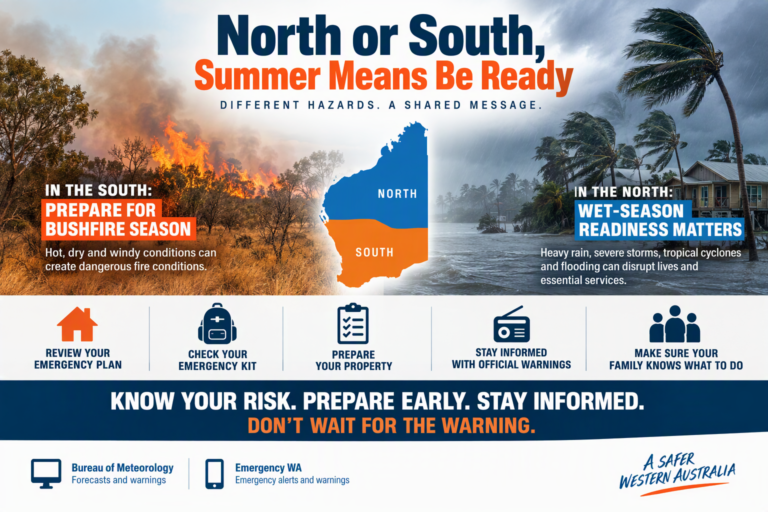
As southern Western Australia prepares for a dangerous bushfire season, the north is entering the wet season, bringing the threat of tropical cyclones, severe storms and flooding. The hazards may differ, but the message for SES volunteers and the communities we support is the same: prepare early and stay informed.
In the south: Prepare for bushfire season
Across the southern half of the State, dry conditions are adding to concerns about the coming bushfire season. Hot, dry and windy weather can create dangerous fire conditions, making preparation a priority before summer takes hold.
For volunteers, readiness starts at home. Review your household emergency plan, prepare your emergency kit and make sure your family knows what to do if a bushfire
threatens. Follow official property-preparation advice and keep across local Fire Danger Ratings, restrictions and warnings.
In the north: Wet-season readiness matters
Northern communities are entering the time of year when heavy rainfall, severe thunderstorms and tropical cyclones can disrupt lives and essential services. Australia’s official tropical cyclone season runs from November to April, although cyclones can occur outside these months.
Damaging winds, flash flooding, road closures and isolation can create significant challenges for communities and responding SES Units. It only takes one cyclone or tropical low to cause serious impacts, regardless of how active the season is overall.
Now is the time to review emergency plans, check emergency supplies and prepare properties in line with official cyclone and flood advice.
Different hazards, shared operational awareness.
Seasonal outlooks help describe broader conditions, but they cannot pinpoint where and when individual emergencies will occur. Shorter-range forecasts, warnings and tropical cyclone track information become especially important as weather systems develop.
For SES volunteers, monitoring changing conditions provides valuable context for operational briefings and helps Units anticipate potential demands. Forecasts and public warnings complement, rather than replace, official operational advice and tasking.
Stay informed this summer.
Monitor Bureau of Meteorology forecasts and warnings,
including the seven-day tropical cyclone forecast and cyclone track maps when issued. Follow Emergency WA for emergency alerts and warnings, and check local Fire
Danger Ratings and restrictions.
Whether facing fire in the south or storms, cyclones and flooding in the north, being prepared matters across the State.
Monitor forecasts and warnings through the Bureau of Meteorology website and app, and emergency alerts through the Emergency WA website and app.
North or south, act now—not when the emergency arrives.
Prepare your household. Know your plan. Stay informed and be ready to act on official advice.