Staying safe and informed in an emergency
During an emergency, one of the best things you can do for your safety is to keep informed about where the danger is and what action you need to take to stay safe. DFES provides a range of official information sources to help you stay up to date.
However, no warning system is foolproof and emergencies can be unpredictable. You should always be prepared to take action at the first sign of danger.
Stay alert
Act immediately for your own safety, no matter how you are alerted to a possible emergency.
If you notice any signs of danger, you need to take action. This may mean checking official sources of information or moving immediately to a safer place.
You should never rely on a text message, telephone warning or a knock on your door before taking action to keep yourself or your family safe.
In a life-threatening emergency call 000.
Emergency WA
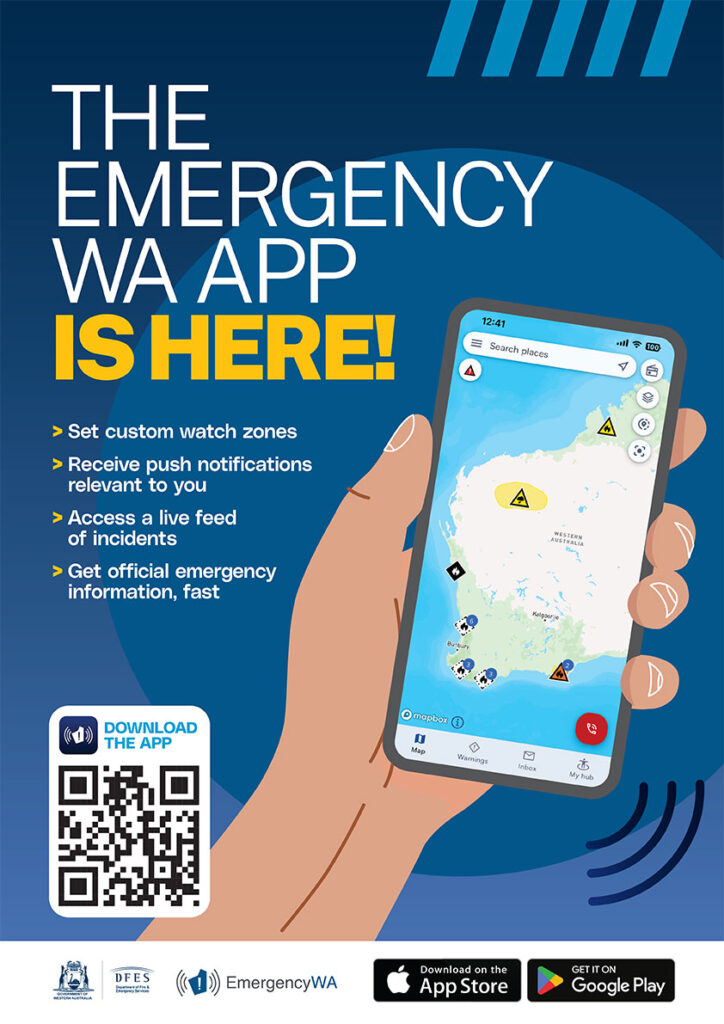
Emergency WA is the quickest and easiest way to find emergency information in Western Australia.
Here you will find official alerts and warnings for bushfires, cyclones, floods, storms, earthquakes, hazardous material incidents and more. You can also find information about Total Fire Bans, Fire Danger Ratings and Prescribed Burns.
Emergency WA also provides a near-real time feed of incidents reported around the State, so if you see signs of a fire or other hazard, you can see if emergency services are already responding.
It’s a good idea to download the Emergency WA app from the App Store or Google Play , or bookmark emergency.wa.gov.au in your web browser.
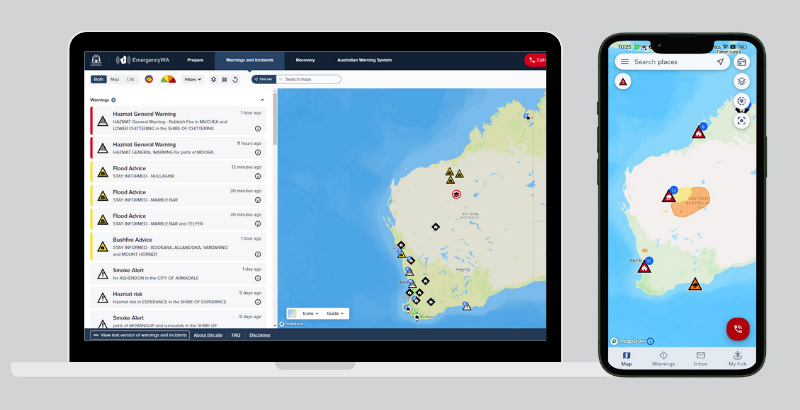
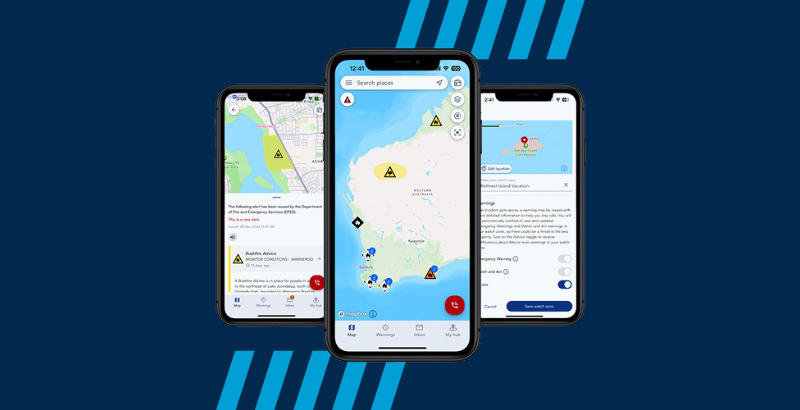
On the app, you can create watch zones to receive relevant alerts and warnings, such as for areas around your home, schools and family members. Refer to the How to Guide for step-by-step instructions on how to use the app.
Emergency WA has been developed through community research and insights from experienced emergency services personnel, and we are constantly working to improve it for the benefit of the WA community.
To get the RSS or CAP AU feeds for alerts and warnings, Fire Danger Ratings and Total Fire Bans visit Emergency WA.
EWA Resources
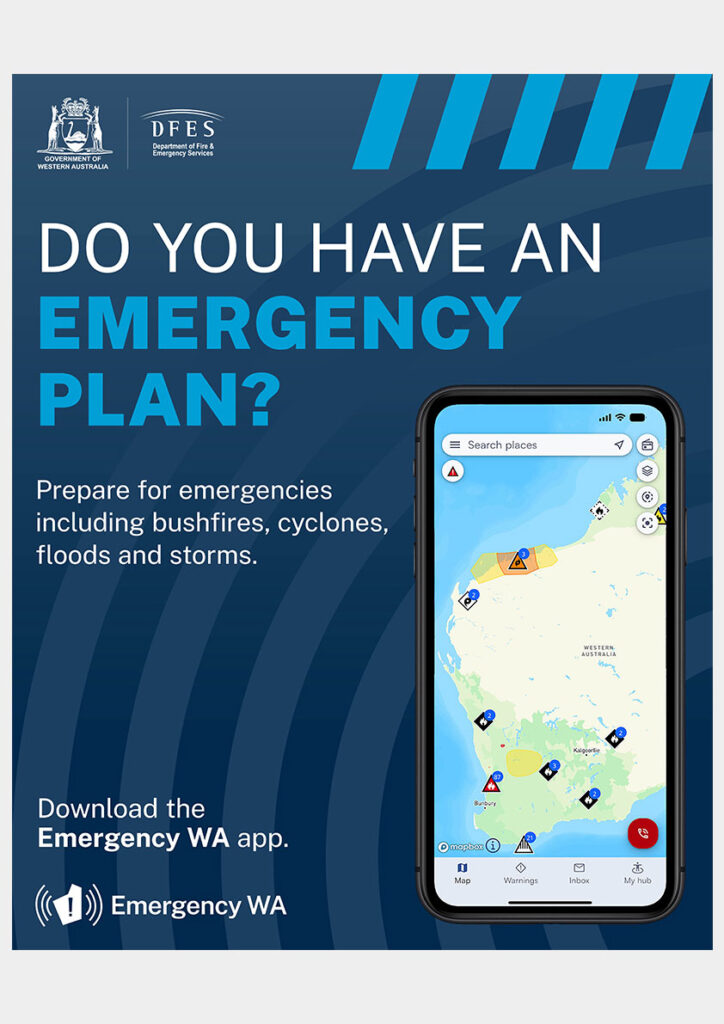
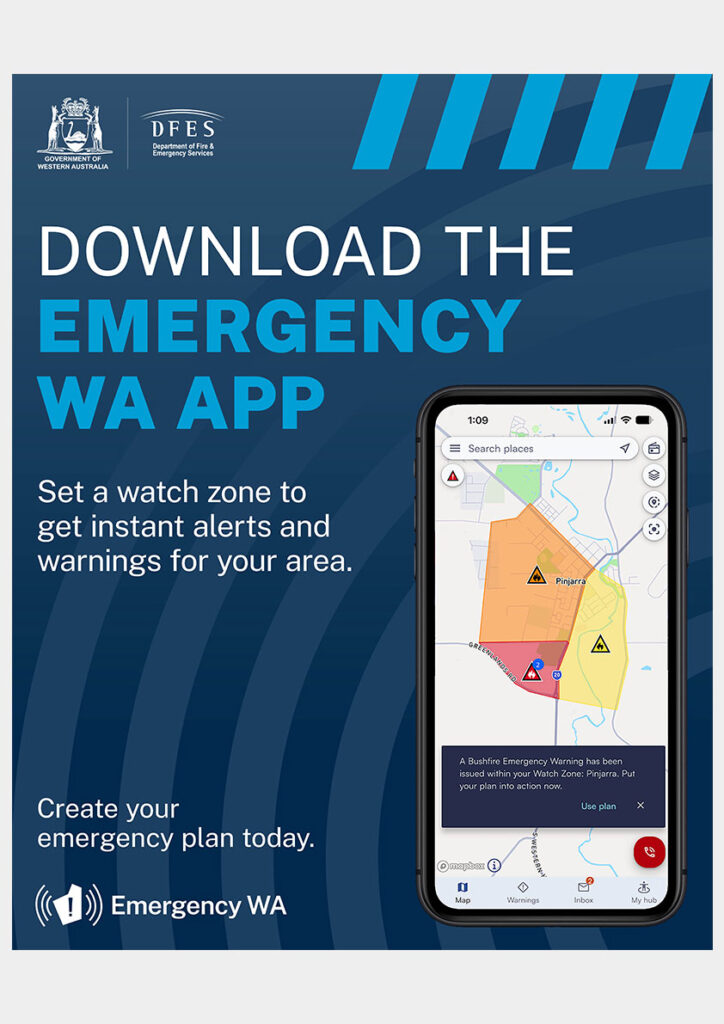
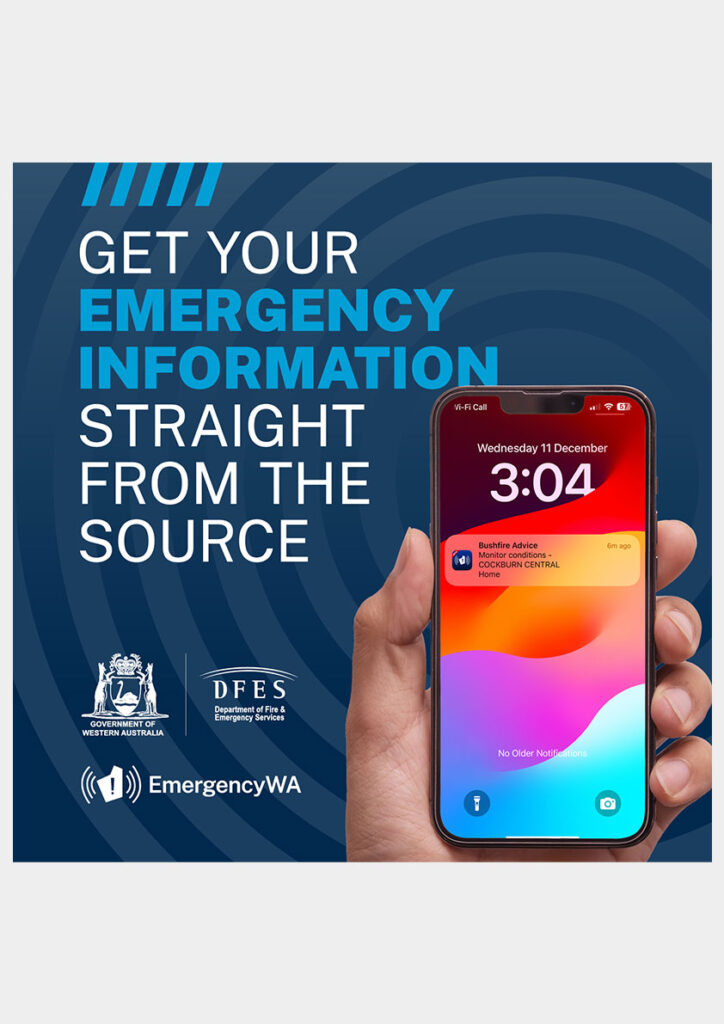
Emergency Plan
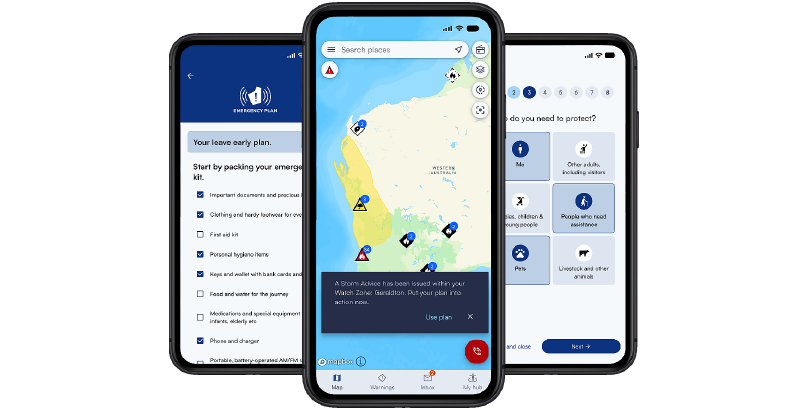
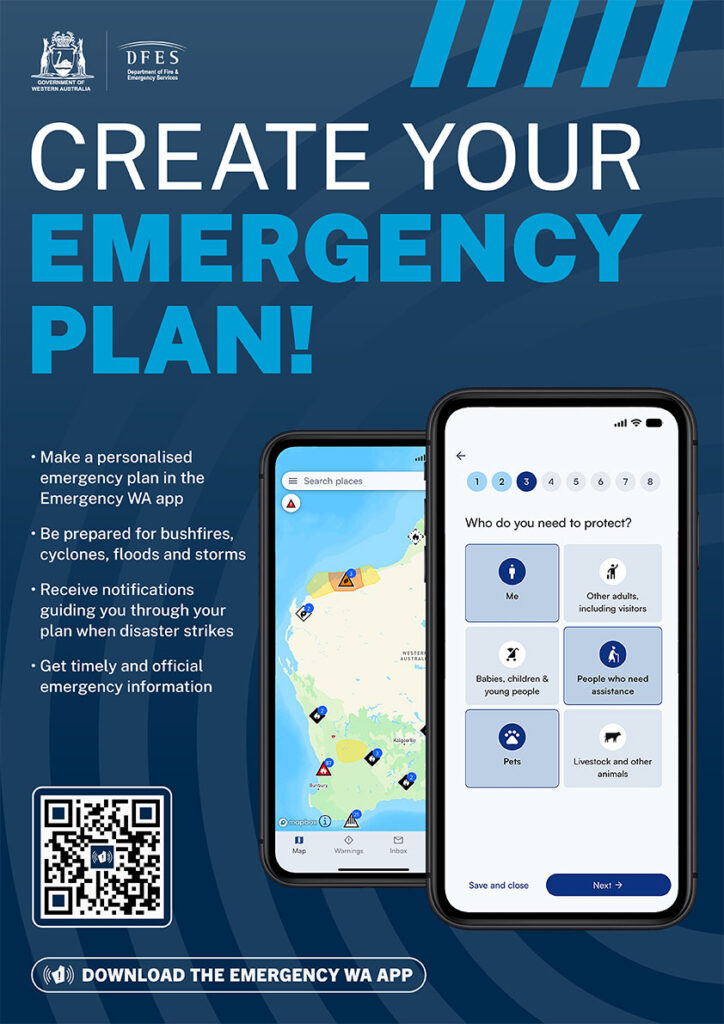
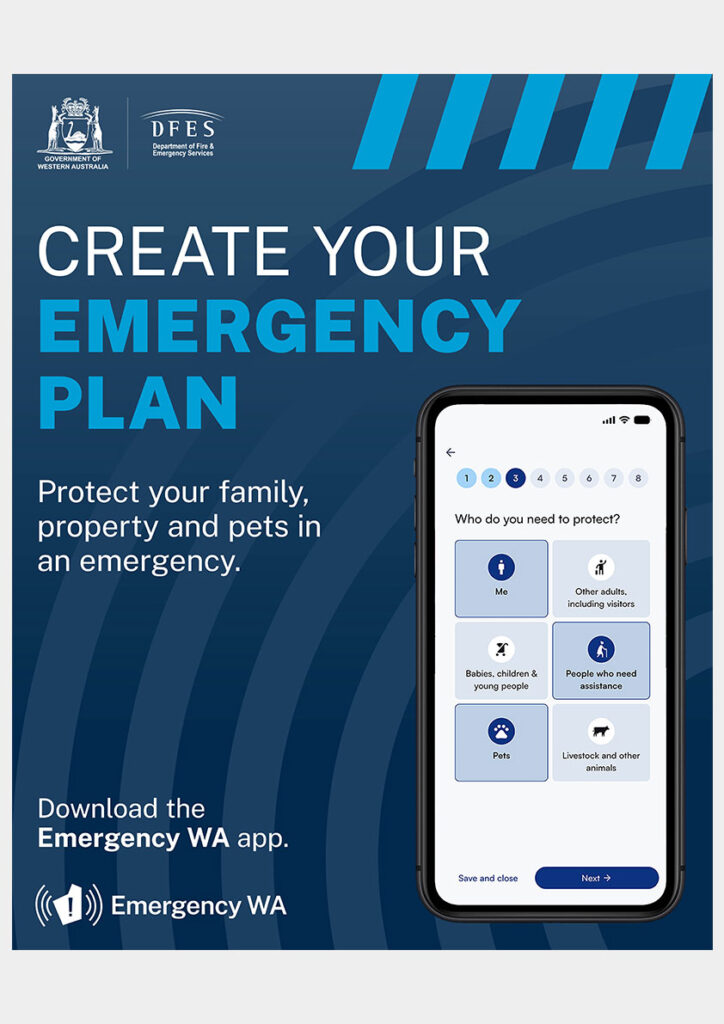
t’s important to create a personalised emergency plan before disaster strikes. You’ll have a better chance of reducing damage and injury if everyone knows what to do and your property is well maintained.
The emergency planning tool within Emergency WA allows you to prepare for a range of hazards including bushfires, cyclones, floods and storms.
If you link your plan to a watch zone in the Emergency WA app, you’ll receive instant notifications when an emergency occurs. You’ll be guided through critical actions such as contacting loved ones, packing an emergency kit and relocating safely.
Prepare for an emergency now and keep yourself and your household safe.
Ways to stay informed
Emergencies can be unexpected, occur suddenly and cause disruptions to power, internet and telecommunications systems.
This is why it’s important you know how to access a range of official information sources during an emergency and take action based on your individual circumstances to stay safe.
Download the Emergency WA app from the App Store or Google Play, or visit emergency.wa.gov.au.
Emergencies such as bushfires and cyclones often cause damage to infrastructure, meaning telecommunications and power outages are common. You may not be able to access the internet during an emergency, so ensure you have a battery-operated radio to listen to ABC. ABC is the State’s official emergency services broadcaster and provides regular updates during emergencies. Find your ABC Local radio station.
Connected communities are safer communities. Stay in touch with neighbours, friends and family in any way you can, as they may be able to alert you to potential emergencies.
You can call 13 DFES (13 3337) at any time to listen to emergency information for your area.
DFES’ Facebook account provides important community safety information, warnings and general DFES news in a timely manner.
Alerts and warnings
A number of State Government agencies issue alerts and warnings on Emergency WA for a wide range of incidents. These warnings give you the best available advice about the levels of risk and danger and the actions to take to stay safe.
We also rely on you to help us know where an emergency is. If there is a life-threatening emergency, or if you can see smoke or fire and cannot see emergency services nearby, please call 000 to report it.
DFES and the Parks and Wildlife Service of the Department of Biodiversity, Conservation and Attractions issue bushfire warnings in Western Australia.
The bushfire warning levels are:
Get to know more about bushfire warnings and how to prepare for a bushfire.
The Fire Danger Rating (FDR) tells you how dangerous a fire would be if one started. The higher the FDR, the more severe a bushfire is expected to be.
The storm community warning levels are:
Emergency Alert
In some circumstances DFES may issue an Emergency Alert telephone warning. Emergency Alert is a national telephone warning system which sends voice messages to landlines and text messages to mobile phones within a defined area under immediate threat. Emergency Alert relies on telecommunications networks to send messages, and message delivery cannot be guaranteed.
Emergency Alert is not used in all circumstances. Whether emergency services decide to issue telephone warnings through Emergency Alert will depend on the nature of the incident.
Familiarise yourself with ways to stay informed so you are prepared with a range of information sources during an emergency and remember to check them continuously to stay aware of local conditions.
It is important that you do not rely solely on receiving an official message and should always be aware of what is happening around you, as you could find yourself suddenly in danger. Act decisively the moment you know there is danger.
Standard Emergency Warning Signal
The Standard Emergency Warning Signal (SEWS) is a distinctive audio signal that is broadcast immediately prior to major emergency announcements on the radio, television and other public media.
The purpose of SEWS is to alert the community that an official emergency announcement is about to be made concerning an actual or imminent emergency that has the potential to affect them.
When you hear the tone, you should pay attention. Listen to the announcement and follow any instructions given.
It is strongly advised that you become familiar with the SEWS sound. Click below to listen.
Australian Warning System
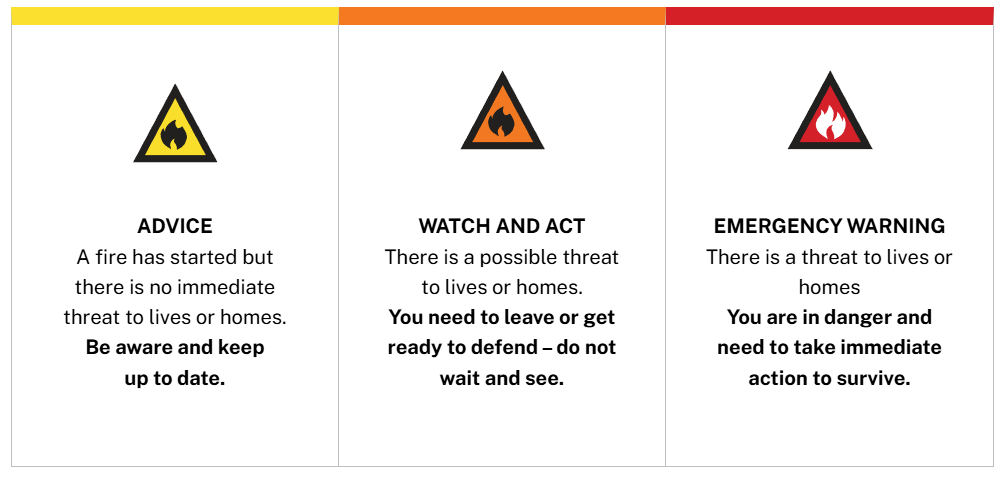
Western Australia has joined with other states and territories to deliver nationally consistent emergency information through the implementation of the Australian Warning System. For more information on this please visit the Australian Warning System page.
The AWS is an easy-to-understand warning system to help you stay safe during an emergency, no matter where you are. Recent changes to this system include changes to the bushfire warning colours, as well as new nationally consistent hazard icons on Emergency WA. Over time you’ll see more changes to emergency information as we continue to achieve national consistency across a range of hazards including cyclone, storm and flood.
Refer to any of these sources for the latest alert and warning information.
Emergency Alert is a telephone warning system used by DFES and other hazard management agencies in order to send emergency information to communities via landline and mobile telephones. Find out more about Emergency Alert.
Call the SES on 132 500 and report the damage and request assistance
Each warning level has a set of action statements to give the community clear and concise information about what to do. Below are some action statements you might see with a warning.